
Remodeling PPC Advertising
Just like high-quality lumber is crucial for a remodeling project, leads are the backbone of your remodeling business. They determine your growth trajectory, influence your revenue, and validate your market position. The more targeted leads you gather, the faster you can scale your remodeling business.
Online advertising is an essential strategy to enhance your brand’s visibility , enabling you to swiftly reach your targeted audience exactly when they’re prepared to make a purchase decision. Among the myriad of online advertising methods, Pay-Per-Click (PPC) advertising stands out for its efficiency and specificity.
PPC ads enable you to zero in on your desired audience using targeted demographics while only requiring you to pay for the interactions generated with your business or website. The more you invest in a PPC campaign, the higher the volume of leads you can anticipate.
Given the multiple platforms offering PPC advertising, Google and Meta (Facebook/Instagram) are arguably the most potent for remodeling contractors and companies. These two giants in the advertising world can propel you towards a greater volume of qualified leads, more successful projects, and consequently, increased revenue.
However, before you dive into either platform, it’s crucial to weigh the pros and cons of each to make an informed decision.
Why Google Ads?
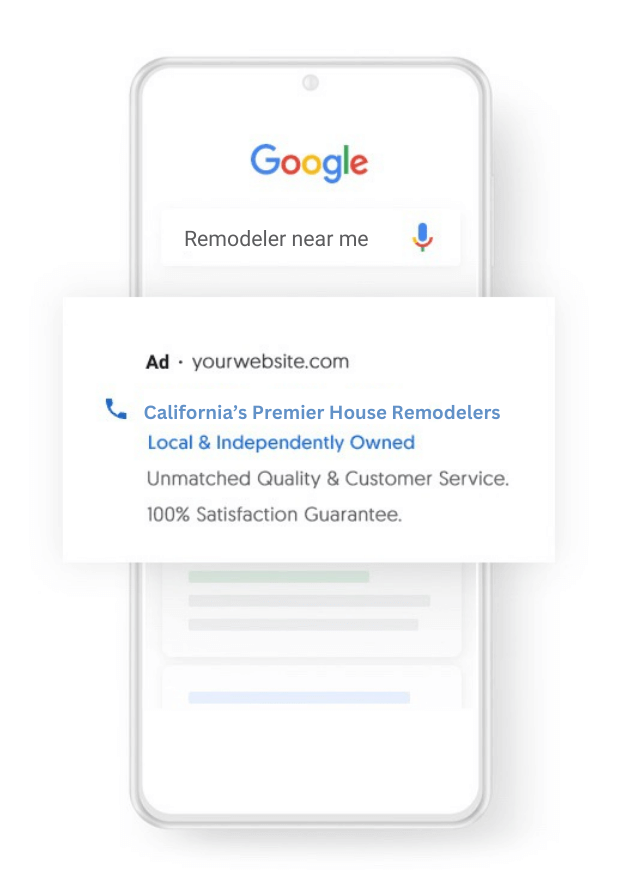
Google Search Ads
Google, a pioneer in PPC advertising, continues to be an exceedingly effective medium for acquiring new remodeling leads. With its advanced targeting features, you can specify demographics like interests, age range, gender, and more.
What makes this targeting valuable?
It ensures your ad is displayed exclusively to those genuinely interested in remodeling services, thereby optimizing your advertising budget.
Moreover, you can craft ad campaigns designed to spotlight specific services or geographical locations. This targeted approach confirms you are reaching the exact clientele who are interested in your most profitable services.
Buyer Intent
Google’s advertising algorithm is engineered to enhance your remodeling leads by filtering out those who are not ready to buy. Unlike social media platforms where user intent may be ambiguous, searchers on Google typically have a higher buyer intent.
What do we mean by Buyer Intent?
Buyer intent is essentially a measure of how likely a consumer is to make a purchase. On Google, users searching for remodeling services or contractors are actively seeking what your business offers. To put this into perspective, let’s compare it to social media platforms.
On Meta platforms like Facebook or Instagram, users scrolling through their feeds are not explicitly looking for remodeling services. When they come across your ad, there may be some level of interest, but this form of marketing is far more speculative in gauging buyer intent.
In contrast, Google allows you to target specific keywords and redirect those clicks to well-crafted landing pages aimed at converting that traffic into confirmed projects.
The Algorithm
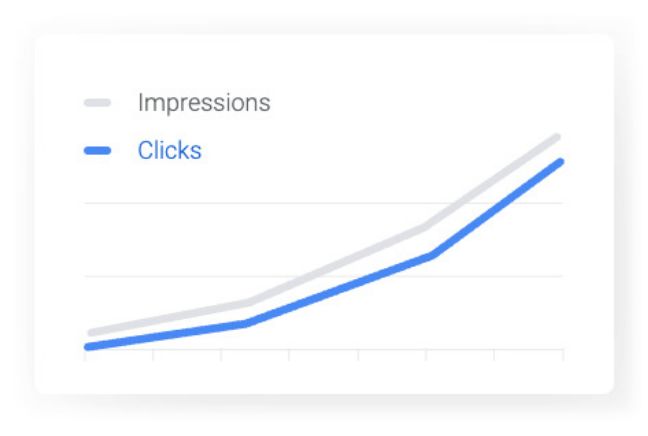
Google’s immense head start in online advertising is primarily due to its continually evolving algorithm, which is updated hundreds, if not thousands, of times annually. Google’s singular focus is to deliver the most relevant and accurate search results based on the user’s query.
Why is this important?
It serves as a guidepost for designing your ads. Your ad copy should not only capture attention but also align closely with the search queries you’re targeting. The better your ad performs in terms of relevance and click-through rate (CTR), the less you’ll have to spend per click (CPC).
Google’s algorithm prioritizes delivering meaningful and relevant search results. As a remodeling contractor, this means that your ads need to be both relevant and valuable to your potential clients. Tailor your ad copy and targeting settings to reflect the interests of those who are most likely to require your remodeling services.
Why Social Media Ads? The Answer is Multi-faceted
Broad Audience Reach—It’s Global
Unlike Google Ads, which are largely dependent on active searches, platforms like Facebook, Instagram, and Twitter offer an almost unparalleled audience reach. With billions of monthly active users, the potential to reach a broad audience on social media is immense. This is particularly useful if your remodeling business services multiple locations or even if you are planning to expand your reach. You can advertise to anyone—people who are just scrolling through their feed may suddenly discover they actually want to remodel their kitchen after seeing your compelling ad.
Visually Engaging—Show, Don’t Just Tell
The power of visual storytelling can’t be overstated, and social media platforms are the ideal venue for this. While Google Ads rely heavily on text and links, social media platforms offer a much richer visual experience. You can post before-and-after photos, time-lapse videos of a remodeling project, or even virtual tours of renovated spaces. For a remodeling business, this is an excellent opportunity to show off your skills and the quality of your work in a more engaging way.
Community and Branding—Your Tribe Awaits
Social media offers something that Google Ads typically can’t—a sense of community. With social media, you’re not just promoting your services; you’re building relationships. You can engage with your audience in real-time, respond to comments, and even handle customer service issues promptly. You can also collaborate with influencers in the home improvement sphere to amplify your reach. This leads to not only better customer relationships but also greater trust and brand loyalty.
Cost-Efficiency—Your Wallet Will Thank You
The cost of advertising on social media can be much more manageable than Google Ads, depending on your targeting and ad quality. This makes it a feasible option for small businesses or those just venturing into the world of digital advertising. Additionally, social media platforms also offer various ad formats and advanced targeting options, like custom audiences and lookalike audiences, giving you more bang for your buck.
Making the Choice: Google or Social Media? The Dilemma Unraveled
The choice between Google Ads and social media advertising is not an easy one and will depend on a multitude of factors—some of which include your business goals, target audience, and even your specific remodeling niche. Each platform offers its unique strengths and weaknesses, and the key is to align these with your business objectives.
Cost Per Lead (CPL)—Measure to Manage
Understanding the average Cost Per Lead (CPL) on each platform can offer you great insights into where your budget would be most effectively spent. Google Ads can quickly become expensive, especially if you’re bidding on highly competitive keywords. On the other hand, with the right strategy, social media advertising can yield quality leads without breaking the bank.
Targeting Flexibility—Pinpoint Precision
Google Ads offers highly specific targeting based on search intent. However, social media platforms provide advanced targeting options that allow you to drill down into demographic data, online behavior, and even individual interests and likes. This is invaluable for a remodeling business that wants to target homeowners interested in home improvement, specific age groups, or even particular geographic areas.
Return on Investment (ROI)—Beyond Dollars and Cents
Both platforms offer robust tracking and analytics tools, which allow you to measure ROI effectively. However, ROI isn’t just a numbers game. It also involves long-term brand building and customer loyalty, areas where social media excels. While Google Ads may bring quicker conversions, social media brings community engagement, which could lead to higher lifetime value per customer.
Speed of Results—The Tortoise and the Hare
While Google Ads might bring you quicker results due to high user intent, social media advertising is generally a slower burn. However, the leads you acquire from social media are often more qualified and more invested in your brand, leading to a higher likelihood of conversion down the line.
Hybrid Strategy—Why Not Both?
If your budget allows, consider a hybrid strategy that utilizes the strengths of both Google Ads and social media advertising. This dual approach allows you to capture leads at every stage of the customer journey—from awareness and consideration to decision and advocacy.
Conclusion
The advertising landscape is vast and ever-changing, but the principles of effective marketing remain constant: Know your audience, convey your message clearly, and choose the most effective channels for your message. Google Ads and social media advertising each offer unique opportunities and advantages for remodeling businesses. Your decision should align with your specific business goals, budget constraints, and target audience characteristics. By understanding the intricate nuances of each platform, you can make an educated choice, allowing you to invest your marketing dollars wisely. Therefore, your strategy may not involve an “either-or” but an intelligent mix of both to achieve your business objectives.
Schedule a Growth Plan Call with us! www.growthplancall.com
